
North America
Air & Sea Freight in North America
Air and sea freight specialists in North America. Tour cargo logistics, cross-border shipping and ATA carnet handling for US and Canada productions.
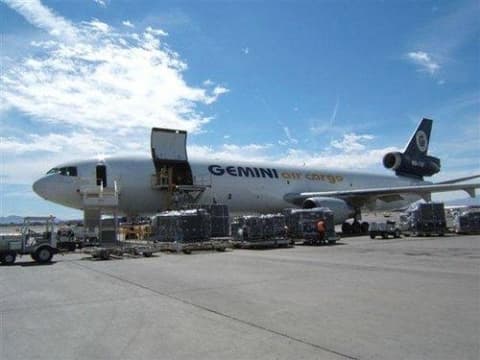
North America is one of the most demanding freight territories in live entertainment. Productions moving between US cities face vast distances, strict airport curfews and time-critical windows that leave no margin for a missed connection. Factor in cross-border shipments between the US, Canada and Mexico, and the complexity compounds quickly. Air and sea freight specialists across North America with specific entertainment industry experience are not a luxury on a major tour leg. They are a necessity.
The North American Touring Freight Market
The sheer scale of North American touring routes sets this market apart. A single arena run might move production through Los Angeles, Las Vegas, Chicago, New York and Miami within a fortnight, with each city requiring its own freight coordination around load-in windows and venue access restrictions. The concentration of major venues and festival sites across the continent means demand for specialist entertainment cargo services is high and, during festival season from April through September, capacity can tighten considerably.
Companies such as Global Motion International, based in Los Angeles, and ACES Cargo out of Las Vegas serve the major western US touring corridor, where back-to-back arena dates and festival commitments drive demand for fast, reliable air freight. On the eastern seaboard and across Canada, operators including Horizon Entertainment Cargo (USA) in North Carolina and Global Motion Canada in Mississauga handle the cross-border logistics that productions regularly require when routing between the US and Canadian markets.
Air Freight vs Sea Freight for Tour Equipment
The choice between air and sea freight on a North American production depends largely on time, volume and the nature of the equipment. Air freight is standard for mid-tour moves between US cities, flying backline, production consumables and replacement gear on tight overnight windows. For productions repositioning large production rigs between continents, such as a European tour transitioning to a North American run, sea freight by container becomes the more practical option, trading speed for significantly lower cost per cubic metre.
Entertainment freight specialists understand the handling requirements that general logistics operators do not. PA systems, LED walls and automated lighting require custom crating, proper suspension within the container and careful weight distribution. A freight partner with no background in touring gear is a risk. The North American market has a number of operators who work exclusively with touring productions and understand that a broken cabinet on arrival is not an insurance claim. It is a cancelled show.
Cross-Border Shipping: US, Canada and Mexico
Productions crossing the US-Canada border need to account for customs clearance on both sides, whether moving by road or air. The Canada-United States-Mexico Agreement (CUSMA) simplifies some commercial trade documentation, but entertainment equipment moving under ATA carnet requires careful handling to avoid customs liability if items are not re-exported within the permitted timeframe. Productions entering Mexico from the US face additional complexity around temporary import permits (TIPs) for professional equipment, and carnet coverage must be confirmed well in advance with the freight operator. In the United States, carnets are issued through the United States Council for International Business, the official national guaranteeing association appointed by US Customs and Border Protection.
The US Customs and Border Protection (CBP) process for bonded entertainment cargo into major hubs such as Los Angeles, New York JFK and Miami can be expedited by freight operators with established relationships and bonded warehouse facilities. For time-critical inbound shipments, confirming your operator's CBP broker credentials and bonded status before booking is worthwhile. If you also need to source travel visas, carnets or work permits for the touring party, specialist agents can handle carnet administration alongside your freight team.
Practical Tips for North American Productions
The logistics chain on a North American tour extends well beyond the freight operator. Productions will typically combine air freight moves with trucking for the ground leg between venues, and adequate storage at key staging cities such as Los Angeles, Chicago and New York becomes important on longer runs where not all production travels with the full rig. Flight cases built to IATA specifications are a practical requirement for any equipment moving by air; non-compliant casing will be refused at check-in and can delay a shipment by 24 hours or more.
Production managers coordinating large North American runs often work with a dedicated logistics coordinator alongside the freight operator. If you need an experienced logistics or production coordinator for the tour, Entourage Pro's crew finder connects you with vetted production crew across the US and Canada. Tour routing decisions also affect freight costs significantly. A linear routing from west to east (or vice versa) is almost always more cost-effective than a scatter-gun schedule that requires backtracking.
Common Questions
Do I need an ATA carnet for equipment entering the United States from the UK?
Yes. An ATA carnet is the standard document for temporarily importing professional equipment into the US for touring or exhibition purposes. It must be issued before departure, with all items listed accurately, and re-exported within the validity period. Your freight operator should be familiar with carnet procedures, but the carnet itself is issued by the relevant Chamber of Commerce in the country of origin.
How far in advance should I book air freight for a North American tour leg?
For standard air freight on a domestic US leg, a week's notice is typically sufficient outside peak festival season. For international inbound shipments or moves involving customs clearance, three to four weeks is more realistic. During April to September, when festival season runs alongside major arena touring, capacity on key routes can be limited, so booking early is advisable.
Can a single freight operator cover the entire North American leg of a tour?
Yes, and it is generally preferable. Using one operator for the full run means consistent documentation, a single point of contact for issues, and a clearer chain of custody for equipment. Operators with offices or partners across the US and Canada, rather than a single depot, are better placed to handle repositioning moves and last-minute changes to the schedule.
What is the difference between bonded freight and standard customs clearance for touring equipment?
Bonded freight is held in a licensed bonded warehouse before customs duties are assessed or paid, which is useful for equipment transiting through a port before moving to another country. Standard customs clearance releases goods directly into the country after duties and documentation are processed. For touring equipment entering the US temporarily under carnet, bonded handling can help manage timing around clearance, particularly for large containerised shipments arriving at busy ports such as Los Angeles or New York.
Browse air and sea freight companies across North America on Showcase Music Directory.
Find the right provider
Air and sea freight specialists in North America. Tour cargo logistics, cross-border shipping and ATA carnet handling for US and Canada productions.